
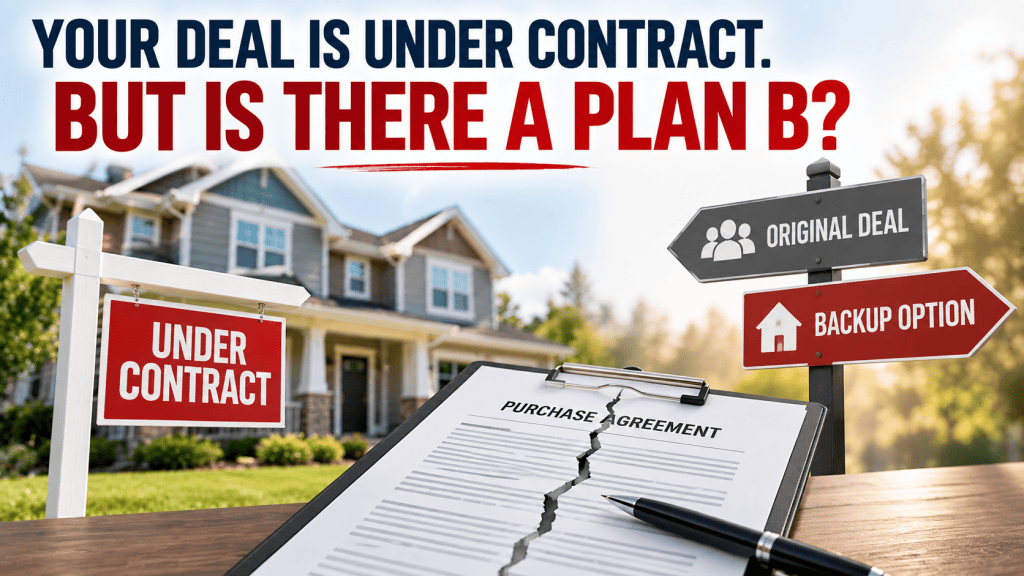
Getting a property under contract feels like a win.
But experienced real estate agents know that a signed purchase agreement is not the same thing as a closed transaction.
Between contract acceptance and closing day, plenty can still change.
Buyer financing can fall apart.
An inspection can uncover something unexpected.
An appraisal can create a new negotiation.
A buyer’s personal situation can change.
The EasyHomeSaleAgent.com Growth Playbook calls one response to that uncertainty a Day-One Backup Contract strategy: exploring an alternative buyer path early instead of waiting until the original transaction has already failed.
The bigger lesson for agents
A backup plan is most useful before you need it. The goal is not to assume the primary buyer will fail. It is to understand what other realistic options may exist if something changes.
Why Pending Deals Still Carry Risk
Once a seller accepts an offer, attention often shifts toward inspections, financing, title work, appraisal, and closing.
But each of those stages can introduce new uncertainty.
Common transaction risks include:
- Buyer financing problems
- Low appraisals
- Unexpected inspection issues
- Buyer hesitation or changed circumstances
- Title or lien problems
- Insurance difficulties
- Missed contractual deadlines
A Backup Strategy Is Different From Expecting the Deal to Fail
There is an important distinction here.
Preparing for a possible problem does not mean undermining the buyer you already have.
The primary transaction should still be handled professionally and according to the contract.
A backup strategy simply asks:
The question
“If this transaction stops working, what realistic options would my seller have next?”
Why Waiting Until the Contract Dies Can Cost Time
When a transaction collapses, the seller may suddenly be back at the beginning.
The property may need to return to the market.
New showings may need to be scheduled.
The seller may need to renegotiate their moving plans.
And if the failed deal happens late in the process, the lost time can be especially frustrating.
The later the problem appears, the more valuable it can be to already understand the seller’s alternatives.
What Can Cause a Contract to Fall Apart?
| Problem | Possible Impact |
|---|---|
| Financing Failure | The buyer may no longer qualify for the loan needed to complete the purchase. |
| Low Appraisal | The buyer and seller may need to renegotiate the price or appraisal gap. |
| Inspection Problems | Repairs, credits, or buyer concerns may create a new negotiation. |
| Buyer Circumstances Change | Employment, family, financial, or other events can affect the transaction. |
| Property or Title Issue | New information may delay closing or require additional resolution. |
Know What the Seller Would Want If the Deal Failed
Not every seller will respond to a failed contract the same way.
One may immediately want to return to the open market.
Another may be exhausted and prioritize a simpler transaction.
Someone moving for work may care most about protecting their timeline.
The agent can prepare by understanding those priorities before a problem occurs.
Ask the seller:
- How important is the current closing date?
- Would you be willing to restart showings?
- Could you tolerate another financed contract timeline?
- Would you want to compare an as-is or cash path?
- If the deal falls apart, would price or certainty matter more?
What Does a Day-One Backup Strategy Actually Mean?
It does not necessarily mean placing the seller into two conflicting contracts.
Contract rights, backup offers, contingencies, and seller obligations depend on the agreements being used and applicable rules.
Instead, think of the strategy more broadly:
Understand another potential path before the first path breaks.
That may include keeping backup buyers engaged, understanding potential institutional-buyer interest, or knowing how quickly the property could return to market.
Where EasyHomeSaleAgent.com Fits
The original playbook recommends exploring institutional-buyer interest early so the seller may already understand an alternative cash path if the primary transaction fails.
Another option before you need it
EasyHomeSaleAgent.com can help agents explore potential institutional-buyer options for a property alongside the traditional transaction, giving the seller another path to evaluate if circumstances change.
A Backup Cash Option Is Not a Guaranteed Closing
This is where the public version needs to be more careful than the original playbook.
An institutional buyer may reduce some risks associated with traditional buyer financing, but that does not mean every offer is unconditional or every transaction is guaranteed to close.
Property eligibility, title, buyer due diligence, terms, pricing, documentation, and other transaction requirements still matter.
Better language
“Let’s understand what alternative options may be available if the primary transaction doesn’t close.”
Backup Buyers Can Matter Too
An institutional cash option is not the only way to protect a seller’s position.
If several buyers were interested in the property, keeping communication open with qualified backup prospects can also matter.
Depending on the market, contract structure, and seller strategy, a traditional backup offer may provide another possible path if the primary contract terminates.
Agents should follow their brokerage procedures and applicable contractual requirements when handling backup offers.
Build a Transaction Failure Plan
Know what matters most if the current transaction stops working.
Pay attention to financing, appraisal, inspection, title, and contractual deadlines.
Understand whether previous buyers, investors, or institutional buyers may still be relevant.
Know what would need to happen if the property returns to market.
Give the seller a clear next-step conversation if the primary deal changes.
The Backup Plan Can Also Strengthen the Listing Presentation
This strategy is not only useful after a listing goes under contract.
It can also help differentiate the agent during the listing appointment.
Most listing presentations focus almost entirely on getting the property sold.
An agent can go one step further and discuss what happens if the first transaction does not make it to closing.
“My job isn’t only to get you under contract. It’s to help you get from listing day all the way to closing.”
That is a different kind of value proposition.
Pipeline Management Is More Than Counting Pending Deals
Agents and team leaders often look at pending contracts as future closings.
But pipeline forecasting becomes more useful when it accounts for transaction risk.
A contract with unresolved financing problems should not necessarily be viewed the same way as one that has cleared major contingencies and is approaching closing.
Understanding where each transaction stands can help agents make better business decisions and communicate more clearly with sellers.
Key Takeaways for Agents
- A signed contract still contains transaction risk.
- Understand what the seller would want to do if the current buyer fails.
- Monitor financing, appraisal, inspection, title, and contractual deadlines closely.
- Keep qualified backup buyers or alternative selling paths in mind when appropriate.
- Do not present an alternative cash path as a guaranteed closing.
- The best backup plan is usually created before the original transaction becomes a crisis.
Frequently Asked Questions
What is a backup offer in real estate?
A backup offer is generally an offer positioned behind a primary contract so another buyer may have an opportunity to proceed if the first transaction terminates, subject to the contracts and rules involved.
Why do real estate contracts fall through?
Transactions can fail for many reasons, including financing problems, appraisal disputes, inspection concerns, title issues, buyer circumstances, missed deadlines, or other contractual matters.
Can a seller have a backup cash option while under contract?
What a seller can do while already under contract depends on the existing agreement, local rules, brokerage procedures, and the structure of any backup arrangement. Agents should follow the applicable contracts and obtain appropriate guidance when needed.
For Real Estate Professionals
Don’t wait for a transaction to collapse before thinking about Plan B.
EasyHomeSaleAgent.com can help agents explore potential institutional-buyer options that may give sellers another path to evaluate if a traditional transaction stops working.
See How It WorksThis article is for general educational purposes for real estate professionals. Contracts, backup-offer procedures, buyer availability, property eligibility, financing, contingencies, transaction terms, timelines, and outcomes vary by transaction and jurisdiction.


Leave a comment