
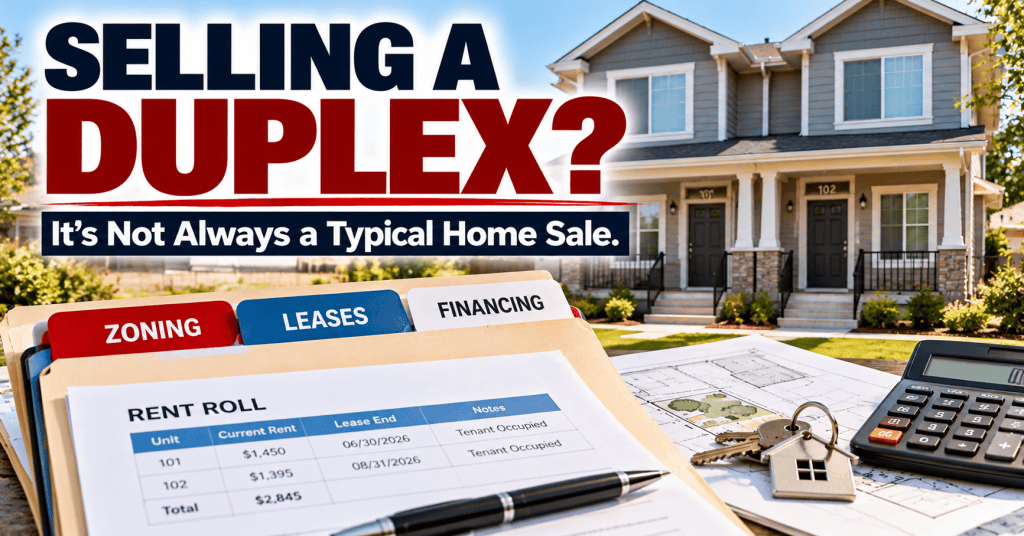
Selling a duplex is not always the same as selling a typical single-family home.
The property may look residential from the street, but buyers may also be evaluating rental income, leases, zoning, condition, financing, and future investment potential.
That can make the transaction more complicated.
It can also mean the right buyer pool matters much more.
Specialty properties often need a specialty strategy
Before marketing a duplex or small multifamily property like a normal house, understand how investors, lenders, and local regulations may affect the transaction.
Start With How the Property Is Actually Classified
One of the first questions should be whether the property’s current use matches its zoning and legal configuration.
A building may physically contain multiple units, but that does not automatically tell you how the local jurisdiction recognizes the property.
Agents and sellers may need to verify:
- Current zoning
- Number of legally recognized units
- Permits for additions or conversions
- Separate utility meters
- Parking requirements
- Occupancy restrictions
- Any known nonconforming use issues
Don’t Market a Duplex Based Only on Square Footage
An investor may look at the property very differently from an owner-occupant.
Rental income, expenses, tenant history, and potential future rents can become important parts of the value discussion.
Think like the buyer
An investor may be asking “What does this property produce?” just as much as “What is the property worth?”
Get the Rental Information Organized
If the property is currently rented, buyers may want to understand the income and operating history.
Useful information may include:
- Current leases
- Rent roll
- Security deposits
- Utility responsibilities
- Property taxes
- Insurance expenses
- Maintenance history
- Known upcoming repairs
Tenant-Occupied Properties Add Another Layer
Existing tenants can affect showings, possession, rent collection, security deposits, and the buyer’s intended use.
A buyer planning to continue operating the property as a rental may evaluate the leases differently from someone hoping to occupy one of the units.
Local landlord-tenant rules and the existing lease agreements matter.
Do not promise vacant possession or changes to existing leases without understanding the actual legal situation.
Financing Can Be Different Too
How a buyer finances a multifamily property can depend on the number of units, occupancy plan, property condition, income, buyer qualifications, and loan program.
Some buyers may use residential-style financing.
Others may rely on investor or commercial lending.
Those financing structures can create different underwriting requirements and timelines.
Why Deals Sometimes Get Stuck in Underwriting
Specialty properties can raise questions that lenders want resolved before funding.
Potential issues may involve:
- Zoning
- Property use
- Appraisal
- Rental income
- Property condition
- Insurance
- Environmental concerns where applicable
- Borrower qualifications
Environmental Review May Come Up in Certain Properties
Environmental concerns are more common in some investment, mixed-use, or commercial-style transactions than in an ordinary home sale.
The type of review required depends heavily on the property, prior uses, buyer, lender, and location.
Agents should not assume every duplex requires an environmental study.
Price the Property for the Buyer Pool
A property may appeal to several different groups.
| Buyer Type | What They May Focus On |
|---|---|
| Owner-Occupant | Living in one unit, offsetting expenses with rent, financing eligibility, and overall condition. |
| Small Investor | Rental income, operating expenses, repairs, future rents, and expected return. |
| Institutional Buyer | Portfolio criteria, property condition, location, income potential, diligence, and acquisition strategy. |
The Highest Offer May Not Be the Strongest Offer
A highly financed offer with multiple unresolved contingencies may carry different risks from another offer with simpler terms.
Sellers should compare more than the headline purchase price.
Compare:
- Purchase price
- Financing
- Proof of funds where appropriate
- Due diligence
- Zoning contingencies
- Inspection rights
- Closing timeline
- Estimated net proceeds
Look beyond the number
The strongest transaction may be the one with the best combination of price, terms, financing, diligence, and likelihood of closing.
Where Cash Buyers May Fit
A buyer using its own capital may not depend on conventional mortgage approval.
That can remove some lender-related steps from the transaction.
It does not mean zoning, title, leases, environmental concerns, or property condition suddenly become irrelevant.
Institutional buyers typically have their own acquisition criteria and diligence requirements.
Where EasyHomeSaleAgent.com Fits
The playbook recommends expanding the available buyer pool when a specialty property is repeatedly running into financing or contingency problems.
Give the seller more than one buyer path
EasyHomeSaleAgent.com can help participating agents explore preliminary institutional-buyer options alongside traditional marketing when an eligible investment property requires a different acquisition structure.
Property eligibility, buyer availability, preliminary pricing, zoning review, leases, due diligence, final terms, and closing timelines vary.
Do Not Promise Contingencies Will Be Waived
The original playbook describes institutional buyers removing zoning and appraisal contingencies.
Publicly, agents should be more careful.
Different buyers may have very different diligence requirements.
Review the actual offer rather than assuming a particular buyer will waive a particular condition.
Cash may simplify financing. It does not eliminate the need to understand the property.
Prepare the Investor Package Before Marketing
Well-organized information can make a specialty property easier for investors to evaluate.
Consider assembling:
- Property details
- Current leases
- Rent roll
- Operating expenses
- Recent repairs
- Utility information
- Known zoning information
- Relevant property disclosures
A Simple Multifamily-Sale Checklist
Understand zoning, number of units, permits, and current use.
Gather leases, rents, expenses, and maintenance history.
Consider owner-occupants, local investors, and institutional buyers where appropriate.
Understand financing, zoning, inspections, appraisal, and due-diligence terms.
Evaluate price, terms, timing, financing, and probability of closing together.
Key Takeaways
- Duplexes and small multifamily properties can require more diligence than typical single-family homes.
- Verify zoning and legal use before making assumptions about the property’s configuration.
- Organized leases, rents, and expenses can help investors evaluate the property.
- Buyer financing may affect underwriting requirements and transaction timing.
- Cash buyers can remove conventional mortgage financing from the equation but may still conduct substantial diligence.
- Compare the entire offer rather than choosing based solely on purchase price.
Frequently Asked Questions
Is selling a duplex different from selling a house?
It can be. Duplex transactions may involve rental income, leases, tenant considerations, zoning, investor analysis, and different financing structures depending on the property and buyer.
Can you sell a duplex with tenants living in it?
Properties may be sold while occupied, but the existing leases, local landlord-tenant rules, buyer plans, security deposits, access, and other contractual obligations should be reviewed carefully.
Do cash buyers purchase multifamily properties?
Some individual and institutional investors purchase multifamily properties using available capital, but property criteria, location, condition, income, pricing, diligence, and transaction terms vary by buyer.
Selling a Specialty Property?
Make sure you’re presenting it to buyers who understand what they’re evaluating.
EasyHomeSaleAgent.com can help participating agents explore preliminary institutional-buyer options alongside traditional marketing strategies.
See How It WorksThis article is for general educational purposes and is not legal, zoning, tax, lending, investment, landlord-tenant, or environmental advice. Property classification, zoning, leases, financing, buyer criteria, diligence requirements, and transaction terms vary.


Leave a Reply